
Can a Standby Generator Charge an EV?
As more drivers across Clover, Lake Wylie, and York make the switch to electric vehicles, our daily routines are changing. Instead of stopping at the gas station, we're plugging in at home overnight and waking up to a full battery. It is a highly convenient way to power your commute, but it also brings up some critical questions about home energy resilience. When severe weather rolls through and the power grid goes down, your home charging routine is suddenly interrupted. This leads to a question we hear quite often at Freeman Electrical Solutions: can a home generator charge an electric car?
The short answer is yes, but it is not quite as simple as just plugging your vehicle into the wall during an outage. Connecting electric vehicle charger to backup power requires careful planning, a proper understanding of your home's total electrical draw, and the right equipment. Electric vehicles require a massive amount of sustained electricity, which can easily overwhelm an improperly sized backup system.
Whether you already have a standby unit or you are considering investing in one, understanding how these systems interact with modern EV technology is essential to keeping your household running smoothly during a blackout.
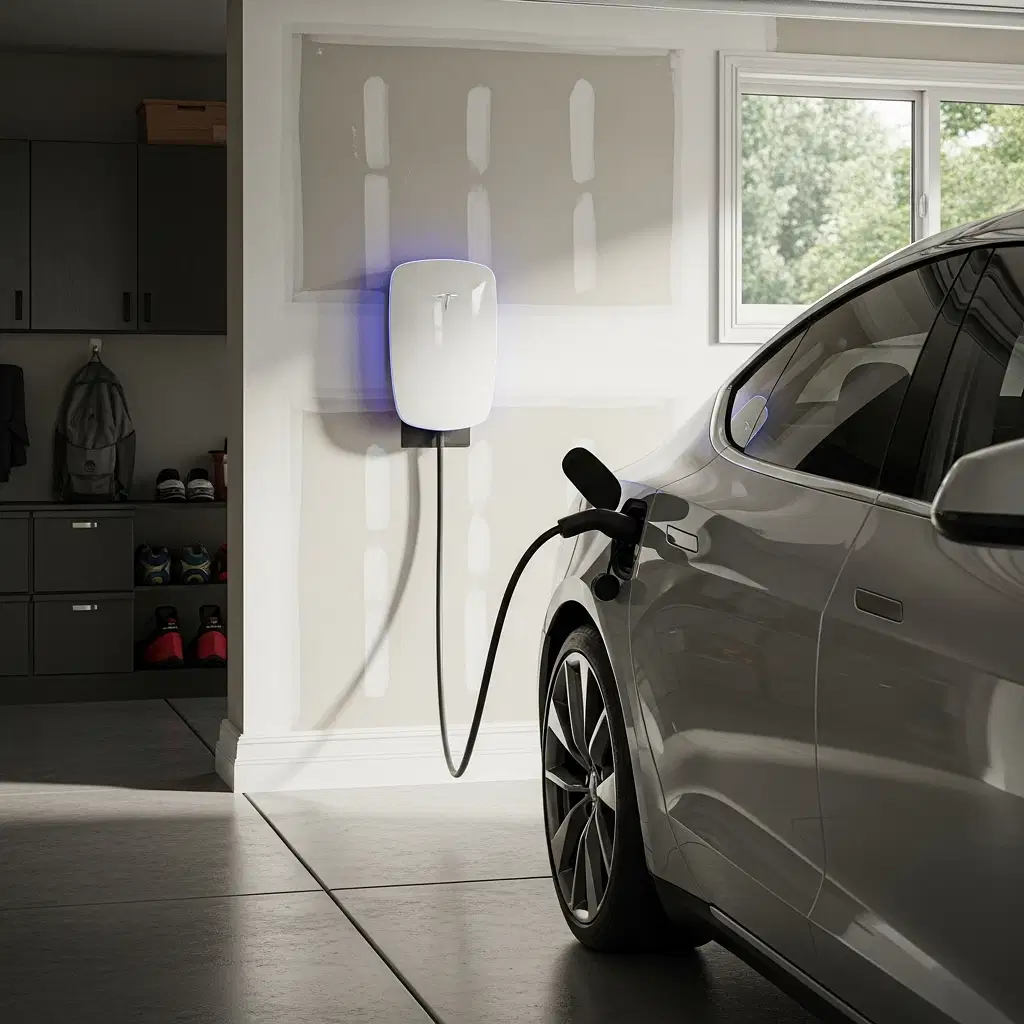
Understanding Power Draw: Level 1 vs. Level 2 Charging
To understand the logistics of charging an EV with a standby generator, we first have to look at how your car consumes electricity.
If you use a standard Level 1 charger—the kind that plugs into a regular 120-volt household outlet—the power demand is relatively low. This type of charging draws about as much electricity as a standard space heater. Most whole-home backup systems can handle this additional load without breaking a sweat, provided your other heavy appliances aren't running simultaneously. The downside is that Level 1 charging is incredibly slow, only adding a few miles of range per hour.
Most EV owners prefer Level 2 chargers, which operate on a 240-volt dedicated circuit. These chargers are fantastic for rapid overnight charging, but they are power-hungry. A Level 2 charger can pull anywhere from 30 to 50 amps continuously for several hours. To put that into perspective, that is similar to running your central air conditioner, an electric oven, and a clothes dryer all at the same time. If your backup system isn't specifically sized to handle that massive spike in electrical demand, the system will overload.
When a generator overloads, its built-in safety mechanisms will kick in to protect the engine and alternator, shutting down the power completely. If you've ever wondered why do my circuit breakers keep tripping, it is often due to this exact scenario: too much continuous demand on a circuit or electrical panel that isn't rated for the load.
Sizing Your Generator and Managing the Electrical Load
If your goal is to maintain your normal driving routine during an extended power outage, you need a backup system that can handle the heavy lifting. This is where professional Generac Generators shine. Whole-home standby units come in various sizes, typically ranging from 14kW to 26kW for standard residential properties, and even larger for sprawling estates or light commercial use.
However, simply buying the largest unit isn't always the most cost-effective or efficient strategy. The secret to successfully charging your vehicle during an outage lies in smart load management. Modern standby systems can be equipped with smart management modules. These intelligent devices monitor your home's electrical consumption in real-time. If you plug in your electric car while the generator is running, the smart module can temporarily pause power to non-essential heavy appliances—like a pool pump or electric water heater—ensuring the generator is never pushed past its maximum capacity.
Evaluating your home's unique energy needs is a critical step. A thorough Electrical Load & Energy Efficiency assessment ensures that your backup system and your charging station work in perfect harmony. Proper sizing not only protects your investment but also ensures you have transparent, upfront pricing on a system that actually meets your daily needs.

Safety, Code Compliance, and Professional Installation
With the rapid advancement in smart home technologies, some homeowners might be tempted to attempt their own electrical work. We strongly advise against this. Electric vehicle charging stations and high-voltage backup systems are complex, demanding strict electrical code compliance to ensure your safety.
A common question we receive is whether it is safe to do DIY electrical work. When dealing with the continuous, high-amperage loads required for Ev Charging Installations, the risks of improper wiring are severe. Loose connections, undersized wiring, or bypassed safety features can lead to extreme heat buildup, melted components, or electrical fires.
A licensed, bonded, and fully insured electrician will ensure that your new equipment is installed to the highest safety standards. We manage the local permitting processes, verify that your home's electrical panel has the capacity for the upgrade, and ensure that both the vehicle charger and the backup system communicate safely. Furthermore, professional installation guarantees that the warranties on both your labor and your installed parts remain fully intact.
Keeping You Powered Up No Matter the Weather
Balancing modern automotive technology with home energy resilience is entirely possible, but it requires a customized approach. A standby unit can absolutely keep your electric vehicle charged and ready for the road, provided the system is professionally sized, expertly installed, and managed with smart load-shedding technology.
At Freeman Electrical Solutions, we are dedicated to helping families throughout Clover, Lake Wylie, and York navigate these modern energy transitions safely and efficiently. If y'all are thinking about adding a charging station to your garage, or if you want to ensure your current backup system can handle your new electric vehicle, we are here to help. Our team provides reliable, punctual service with clear arrival windows and upfront pricing.
Ready to upgrade your home's energy resilience? Reach out to us through our Contact Us page to schedule a comprehensive evaluation of your electrical system today.