

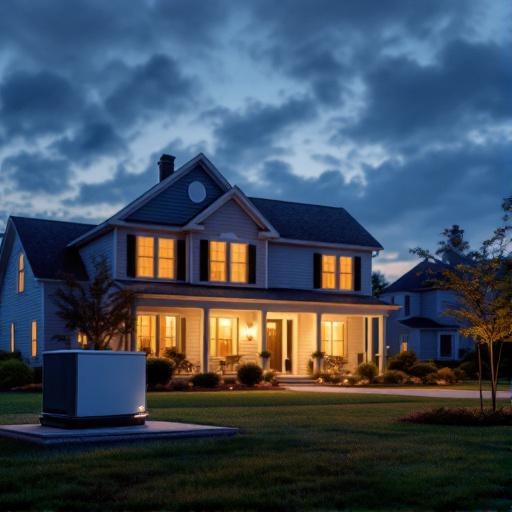
Power outages are a fact of life in Chester County, South Carolina. Severe storms, high summer demand, and aging infrastructure make electrical interruptions more than just an inconvenience—they are a recurring risk for homeowners.
Many outage “preparation tips” focus on flashlights and bottled water. While those are useful, they do not address the core issue: keeping your home functional and safe when the power goes out.
This guide explains what actually works for power outage preparation, what fails when you need it most, and how Chester County homeowners can protect their homes long before the lights go out.
Why Power Outages Are So Common in Chester County
Chester County homes face unique outage risks due to regional conditions.
Severe Weather and Storm Damage
Thunderstorms, hurricanes, and strong winds frequently damage power lines and substations throughout South Carolina. Even short storms can cause outages lasting hours or days.
Summer Electrical Demand
Extreme heat pushes air conditioning systems to run continuously. High demand strains the grid and increases the chance of transformer failures and rolling blackouts.
Rural and Semi-Rural Power Lines
Many Chester County neighborhoods rely on overhead power lines that are more vulnerable to weather-related damage than underground systems.
Because these factors are ongoing, power outages should be expected—not treated as rare events.
What Actually Happens During a Power Outage
When power is lost, homes quickly experience more than darkness.
Common outage consequences include:
- Loss of refrigeration and food spoilage
- HVAC shutdown during extreme heat or cold
- Sump pumps and well pumps failing
- Internet and communication disruptions
- Security systems going offline
- Medical and mobility equipment losing power
Short outages may be manageable. Extended outages create safety, health, and property risks.
Basic Outage Prep That Helps—but Isn’t Enough
Some preparation steps are still worth doing:
- Flashlights and battery-powered lanterns
- Surge protectors
- Battery backups for small electronics
However, these measures do not restore power. They only reduce inconvenience temporarily.
Portable Generators: Where They Fall Short
Portable generators are often the first solution homeowners consider. While they can be useful, they have significant limitations.
Portable generator drawbacks include:
- Manual startup and refueling
- Limited power output
- Carbon monoxide risk
- Inability to power HVAC or entire homes
- Dependence on gasoline availability
Portable generators work best for short-term, partial needs—not for full home protection.
Backup Power That Actually Works: Home Standby Generators
A home standby generator is the most reliable solution for extended outages.
Whole-house and standby generators:
- Start automatically when utility power fails
- Power essential circuits or the entire home
- Run on natural gas or propane
- Eliminate extension cords and manual setup
For many Chester County homeowners, standby generators are the only solution that provides continuity, safety, and peace of mind.
Choosing Between Partial and Whole-House Backup
Not every home requires full-home backup. The right solution depends on your needs.
Partial Backup
Powers critical systems such as:
- Refrigeration
- HVAC or heating
- Medical equipment
- Lighting and outlets
Whole-House Backup
Provides seamless power to the entire home, including:
- Central HVAC
- Water heaters
- EV chargers
- Home offices
A professional load calculation determines the appropriate system.
Fuel Reliability Matters During Outages
Fuel choice directly impacts generator reliability.
- Natural gas: Continuous supply, ideal where available
- Propane: Long shelf life, reliable with proper tank sizing
- Gasoline: Limited availability during emergencies
Standby generators avoid fuel shortages by connecting directly to permanent fuel sources.
Why Outage Preparation Should Happen Before the Storm
After major storms, generator demand spikes. Installation timelines grow longer, and options become limited.
Preparing early ensures:
- Proper system design
- Faster installation
- Better availability
- Lower stress during emergencies
Waiting until outages worsen often means waiting too long.
Common Mistakes Homeowners Make
- Underestimating outage frequency
- Relying solely on portable generators
- Skipping professional evaluations
- Delaying installation until after a major outage
These mistakes turn manageable outages into emergencies.
How Backup Power Protects Your Home
Reliable backup power prevents:
- Food loss
- Water damage from failed pumps
- Unsafe indoor temperatures
- Security vulnerabilities
- Lost productivity
Preparation is not about convenience—it’s about protection.
Final Answer: What Actually Works
The most effective power outage preparation combines:
- Realistic risk assessment
- Reliable backup power
- Professional system design
For Chester County homes, standby generators consistently outperform temporary solutions.
Next Step: Professional Backup Power Assessment
A professional evaluation determines:
- Whether backup power is necessary
- What level of coverage makes sense
- Generator sizing and placement
Preparing before the next outage is the only strategy that truly works.
Frequently Asked Questions
How long do outages usually last in Chester County?
Outages can last from hours to several days depending on storm severity.
Can a generator power my air conditioner?
Yes, if properly sized.
Is a standby generator noisy?
Modern generators are significantly quieter than older models.
Does backup power increase home value?
Yes, especially in outage-prone areas.
Do generators require maintenance?
Yes, but maintenance is minimal and scheduled.